The Psychology of Trading
by Brett N. Steenbarger
Amazon affiliate links. By using them, you support our free content at no extra cost to you.
The summary
Steenbarger is both a clinical psychiatrist and an active trader, and he applies that background to the mental patterns costing you money. Drawing on real cases of traders who kept repeating the same mistakes, he shows the problem is almost never the strategy: it's what happens in your head before, during and after every trade.
The book works through techniques borrowed from brief therapy — cognitive restructuring, tracking automatic thoughts, emotion journaling — adapted so you can apply them yourself, without needing an outside therapist. These aren't generic self-help exercises: they are built specifically for sitting in front of the market with real money on the line.
What sets Steenbarger apart from other trading psychology authors is his genuine clinical training: he doesn't improvise analogies, he brings a structured framework for diagnosing which pattern you're repeating — anxiety, impulsiveness, perfectionism — before trying to fix it. It's a book meant to be worked through, not just read: every chapter asks you to apply something to your own trading.
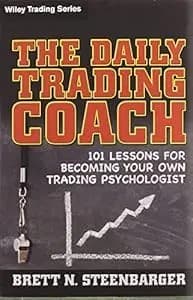
It fits well whether you're just starting out and already notice emotions interfering with your decisions, or you've been trading for years and suspect your ceiling isn't technical. If this approach clicks, this catalogue also has The Daily Trading Coach, by the same author, with 101 shorter, more practical lessons to keep working on the mental side.
About the author
Brett N. Steenbarger
American psychologist specializing in trader performance and a professor of psychiatry; he has worked as a trading coach at proprietary firms and is a leading author on trading psychology.
What You'll Learn
- How to identify destructive emotional patterns
- Brief therapy techniques applied to trading
- How to become your own trading psychologist
- Diagnosing whether your issue is anxiety, impulsiveness or perfectionism
- Journaling and cognitive restructuring for daily use
- Separating market analysis from emotional execution
Recommended For
- Traders who lose more to emotion than analysis
- Anyone starting to notice the problem isn't the strategy
- Traders of any level who want to understand their own mind
- Readers looking for practical tools, not just theory
- Those who'll follow up with The Daily Trading Coach
Details
- Published
- 2003
- Pages
- 432
- Publisher
- Profit Editorial
- ISBN
- 9788417942465